credit: Deposit Photo
I’ve shared with you before that I’m interested in getting our family more into a whole foods lifestyle centered around local and organic foods. Or as my husband calls it, becoming a hispter.
One of the things that has been weighing on my mind is switching to raw milk. (Milk that’s not pasteurized or homogenized). It’s incredibly controversial. Like more so than the breast vs. bottle debate. The FDA says raw milk isn’t safe and the whole foodies on the other side say that it’s the best possible thing you can do for your heath and it can cure all kinds of digestive issues, allergies, etc.
I did a lot of research. A LOT. I was scared of raw milk because I am all for modern medicine. I’m not the type of mom who refuses to vaccinate her kids and I think that a lot of scientific advances are great. I always thought pasteurization fit into that category.
The more research I did, the more raw milk didn’t seem all that dangerous. The FDA has a report that says between the years of 1987-2010 three people died and there were 6 stillbirths and 2 miscarriages related to raw milk. There were 269 hospitalizations in our country due to diseases like food poisoning from raw milk. I also read this study from Cornell. The reason that pasteurization started was because industrializing milk and keeping cows in confined quarters where they were dirty and not getting a natural diet led to a lot of increased cases of diseases such as Tuberculosis that we are now tested for or vaccinated against. The main risk now is food poisoning from e coli. Over the span of 23 years, the rate of hospitalization and death compared to consumption seemed pretty low-risk to me. After all, I feed my children spinach, peanut butter, and beef and there have been outbreaks and recalls due to all of those as well.
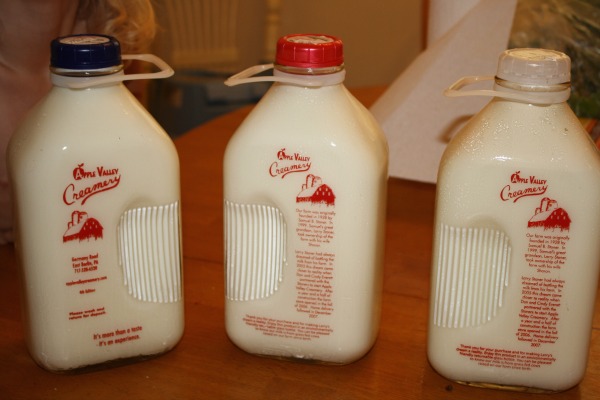
So we decided to try it. I made sure that I found a local creamery with pastured, grass-fed cows (they are also supplemented with non-GMO feed.) They got bonus points because they deliver. I bought a half gallon of three different types of milk (1.5%, whole, and raw) so that we could test them and decide for ourselves.
It’s about to get very 5th grade science fair up in here, people. Ready?
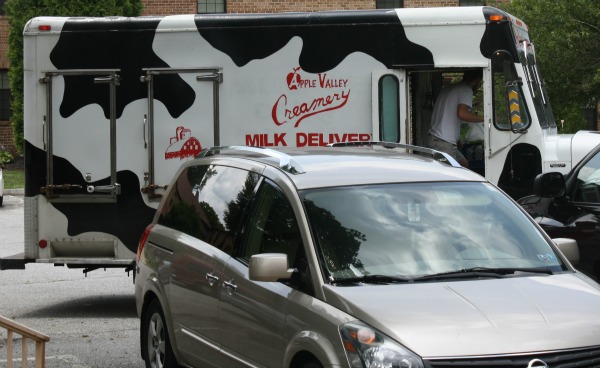
Yeah, we have a milk man. It’s pretty awesome.
Purpose: To determine which type of milk our family of five, 2 adults and 3 kids, should consume regularly. We will determine this through observation and comparison of price, overall appearance including taste, color, and thickness as well as smell and personal preference of the observers.
Hypothesis: The raw milk will taste, look, and smell different than the 1.5% and whole milk. The whole milk will be thicker than the 1.5%, but not as thick as the raw.
Materials:
- 1.5%, whole, and raw milk from Apple Valley Creamery.
- medicine dropper (clean) stolen from the children’s Tylenol.
- plastic cups
- paper towels
- 3 willing taste testers
Procedure:
- Observe each container, noting color, smell, etc.
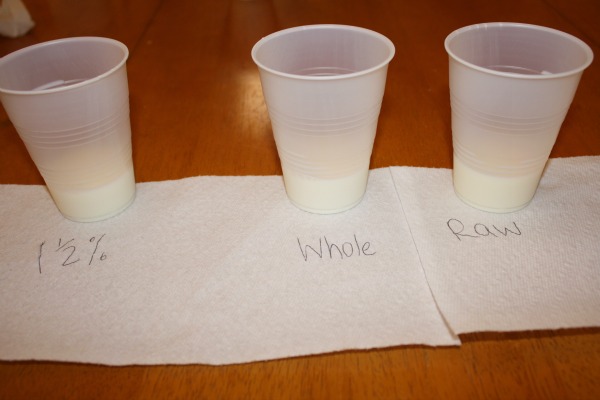
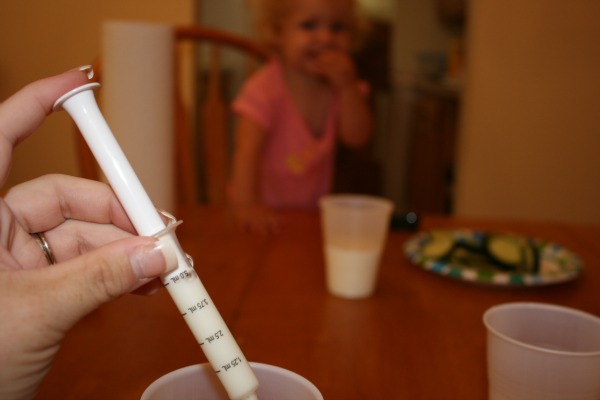
- Transfer 30 mL of each type of milk into clear plastic cups.
- Using dropper, remove 5mL of milk from each cup and spread liquid onto a hard surface. (table)
- Observe and compare liquids
- Taste each type of milk.
- Repeat step 5 with each participant.
Variables:
Independent: type of milk (1.5 %, whole, or raw)
Dependent: appearance, smell, taste, price
Controlled: temperature, measurements, creamery (which is assumed to include diet and treatment of cows)
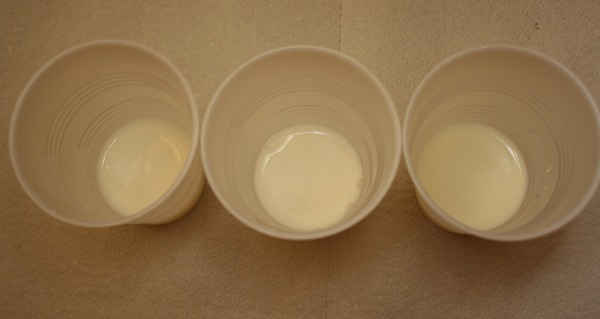
Data and Observations:
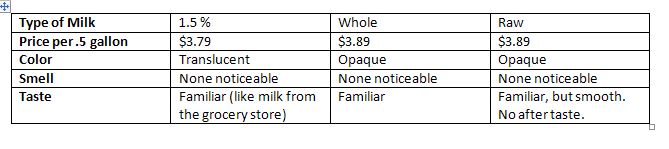
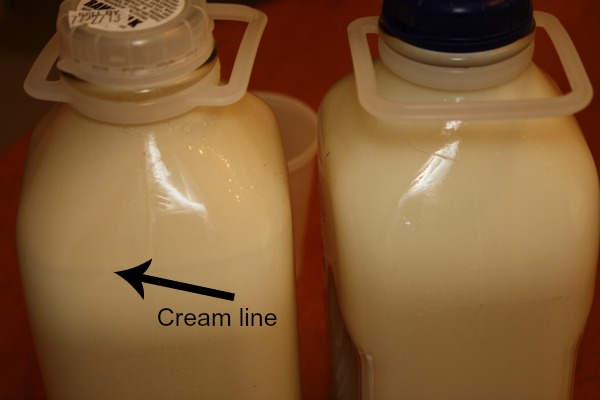
The raw milk had a cream line in the container, while the other types (which were homogenized) did not. It was shaken before poured to incorporate the cream.
We were surprised to see that the raw milk seemed to be thinner than the whole milk and spread more freely on the table than the 1.5% or whole milk.
The 1.5% seemed to be more gray in coloring than the whole or raw milk.
The 1.5% and whole milk left a familiar aftertaste and coating on the tongue. The raw milk was smooth and did not leave any after taste whatsoever.
Penny was not given any raw milk due to her age (18 months) and FDA recommendations. Nicholas, Abby and Mom tasted all samples. Nicholas and Abby both chose the whole milk as their favorite. Mom chose the raw.
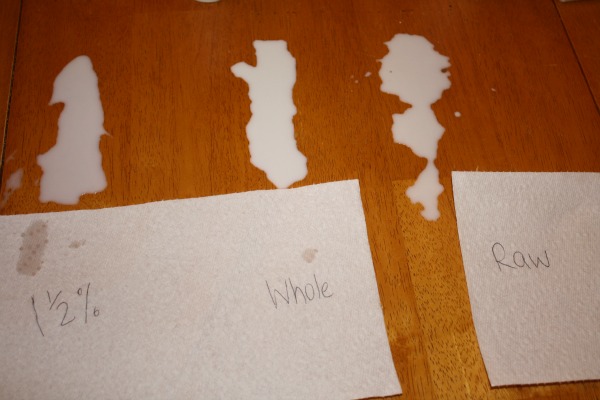
Conclusion: Due to the personal preference of our taste testers and taking FDA recommendations into consideration, whole milk from this local creamery is probably the best choice for the children in our family. We appreciate the fact that the cows are pastured and grass fed and do not receive GMO feed or unnecessary antibiotics. We will repeat this experiment with Dad and may continue to purchase raw milk for the adults, depending on his personal preference.
This creamery also offers a variety they call cream line whole milk, which is pasteurized, but not homogenized. That might be a good compromise for our family.
Admittedly, I took it a little far, but we had fun with our experiment. 🙂
You might also want to check out:



















What You’re Saying